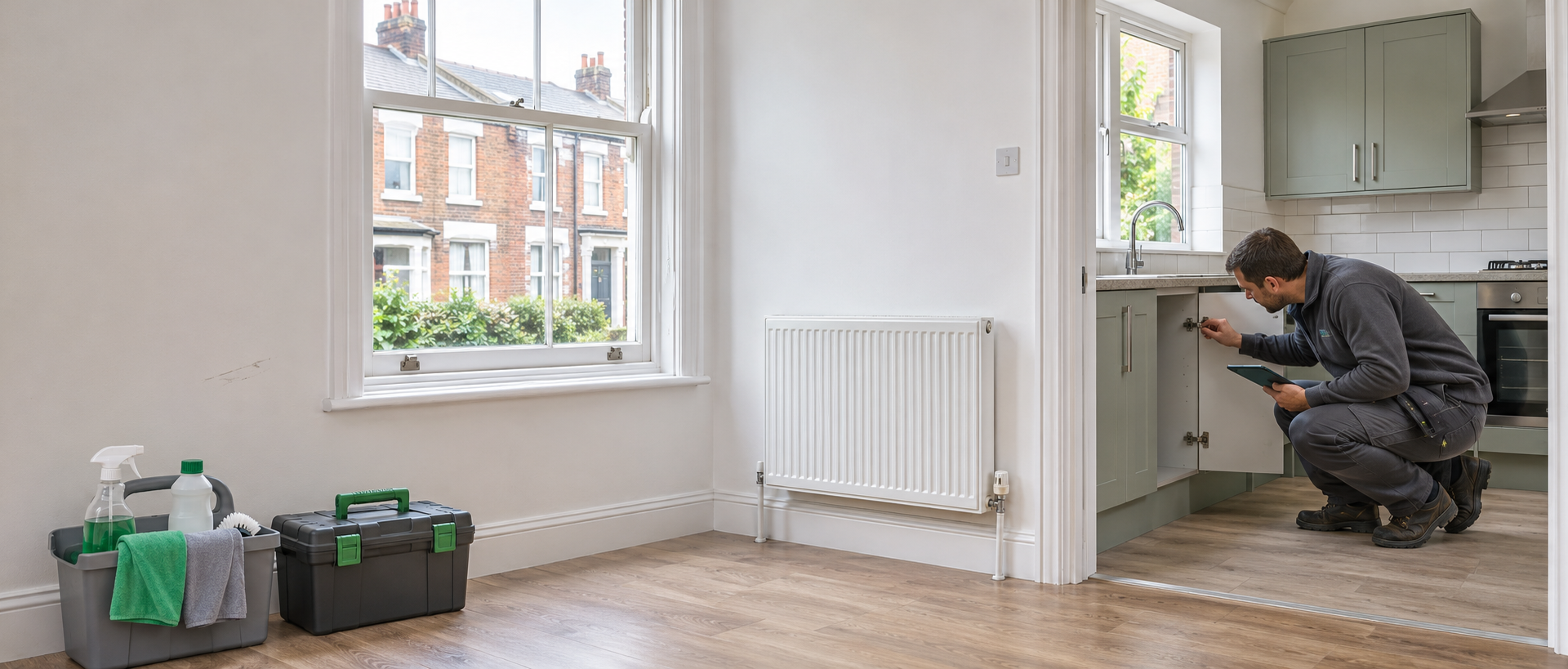
The keys have been returned, the furniture has gone, and your rental property is empty. But is it ready for someone new? Tenant turnover is the period between one tenant leaving and the next moving in. For landlords, it is the chance to check the property properly, deal with outstanding maintenance and prepare a home that feels ready from the first viewing.
Start with the Property’s Condition
An empty home can reveal things that were difficult to spot during an occupied inspection. Marks behind furniture, a slow leak beneath the sink or a damaged cupboard hinge may only become obvious once the tenant has left.
-
Record what has changed. Walk through each room and compare its condition with the check-in inventory and photographs. Take clear, dated pictures and make factual notes. This creates a useful record and helps distinguish routine wear from issues needing closer attention.
-
Check how things work. Look beyond the walls and flooring. Test taps, check drainage, open windows and cupboards, and check supplied appliances where safe to do so. Record concerns about heating, ventilation or electrical fittings for an appropriate professional to investigate.
The aim is to leave the inspection with a clear work list. “Bathroom needs attention” is easy to overlook; “extractor fan does not run” gives someone a specific task to resolve.
Put Repairs Before the Final Clean
Cleaning too early can mean doing the same job twice. Decorating, plumbing repairs and other maintenance can leave dust or debris behind, so the order of work matters.
-
Resolve the cause of problems. A stained ceiling may need more than fresh paint. Find out whether a leak is still active before redecorating. Likewise, investigate damp or recurring mould instead of covering it up. Addressing the underlying issue helps prevent it becoming the next tenant’s first complaint.
-
Clean after the work is finished. Give particular attention to kitchens, bathrooms, appliance interiors, cupboards and flooring. Check less visible areas, including extractor filters and the spaces behind accessible appliances. A property should feel cared for when someone opens a cupboard, not just when they walk through the front door.
Some homes need only minor attention. Others need several trades. Agreeing the sequence and checking progress helps keep the handover organised.
Check Readiness Before Handing Over
A home can look finished while still having a loose handle, an unfinished repair or missing information. The final visit is an opportunity to catch those details.
-
Complete a final walkthrough. Confirm that agreed repairs are complete, check keys and locks, and make sure relevant safety checks and documentation are current. Requirements differ across the UK, so use a checklist suited to the property’s location and tenancy type.
-
Prepare a clear handover. Update the inventory, record meter readings where applicable, and organise appliance instructions and maintenance contact details. If the property is being marketed, use photographs and descriptions that reflect its current condition.
Tenant turnover is more than filling an empty home. A careful inspection, sensible work schedule and documented handover give the next tenancy a stronger start. Before releasing the keys, ask one practical question: would a new tenant find anything today that should already have been dealt with?
